
Jewellery Journal · · Noura’s Jewellery
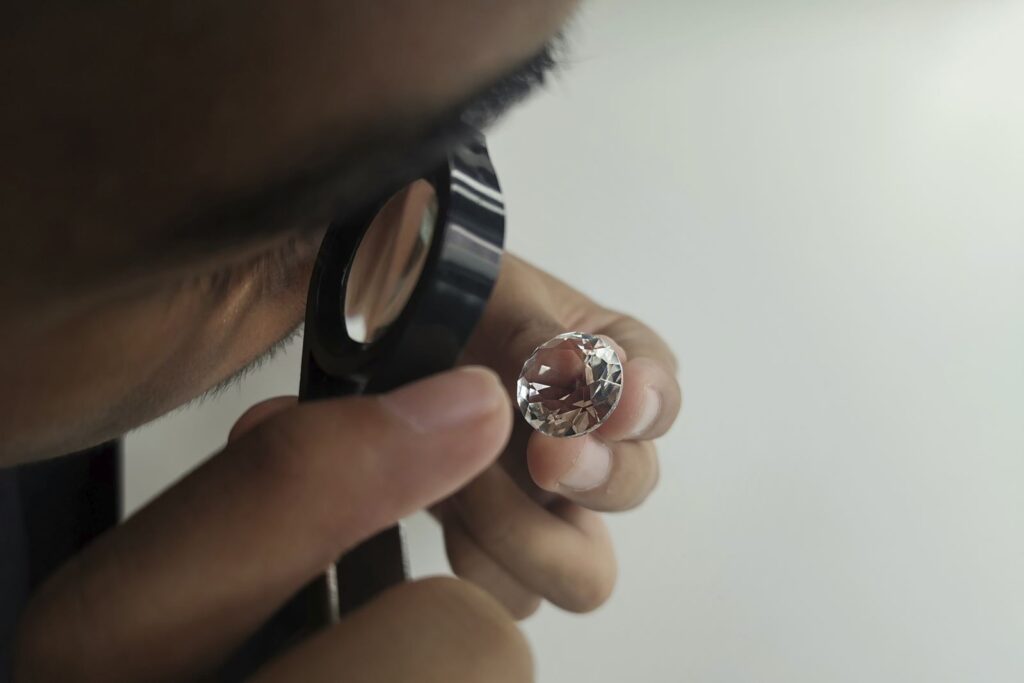
Your diamond ring comes with an insurance appraisal showing a large figure, yet the offer you receive when you try to sell it is much lower. It feels like something is wrong, but usually nothing is: an appraisal, a grading report and a resale offer are three different documents that answer three different questions. This guide explains each one, what affects a diamond’s value, and how to prepare before you discuss selling, resetting or insuring a diamond in Ottawa.
Three documents, three purposes
| Document | What it tells you | What it does not tell you |
|---|---|---|
| Grading report | The diamond’s measured characteristics: carat weight, colour, clarity, cut and more, usually from an independent laboratory | A price of any kind |
| Insurance appraisal | An estimate of what it would cost to replace the piece new, at retail, on a given date | What a buyer will pay you today |
| Resale offer | What a buyer will actually pay for this piece now | What it would cost to buy a new one |
Because an appraisal is written to replace a piece at retail, it is normally higher than a resale offer. Insurers want enough cover to buy a new ring; a buyer pays what the diamond can realistically be resold for.
What affects a diamond’s value
- The four Cs: carat weight, colour, clarity and cut all matter, and cut has a big effect on how a diamond looks.
- Natural or laboratory-grown: lab-grown diamonds are real diamonds, but their resale value is usually much lower than that of natural diamonds.
- The grading report: a report from a recognised laboratory makes a diamond easier to assess and to resell.
- Condition: chips and abrasions on the edges or facets can lower the value.
- Shape and size demand: some shapes and sizes are easier to resell than others.
- The setting: the gold or platinum is assessed separately from the stone.
This is also why a gold calculator cannot value a diamond. The metal and the stone are two separate assessments.
Prepare before you visit
- Bring the grading report, appraisal and receipt if you have them, and check that they really belong to this stone.
- Leave the diamond in its setting. Removing it yourself can chip the stone or damage the prongs.
- Do not clean it with harsh chemicals; warm water and mild soap are enough.
- Think about what you want: to sell, to reset it in a new design, or simply to understand it.
Questions to ask about an offer
- Does the offer cover the diamond, the setting, or the whole ring?
- Was the stone identified as natural or laboratory-grown, and how?
- Which grading characteristics did you use?
- Was any damage found that affects the value?
- Would the diamond be better used in a new design instead?
Keeping the diamond instead
If the diamond means more to you than its price, it can often be reset in a new ring or turned into a pendant. Its condition and size have to suit the new setting, so we look at the stone first and then talk about designs. See jewellery redesign and custom jewellery design.
Natural and lab-grown: why it matters when you sell
Laboratory-grown diamonds are made in controlled conditions and have the same crystal structure as natural diamonds. To the eye, and even under a loupe, the two can look identical. The difference shows when you sell: new lab-grown diamonds keep becoming more affordable to produce, so their resale value is usually much lower than that of a natural diamond of the same size and grade.
Many grading reports state clearly whether a stone is natural or laboratory-grown, and some lab-grown diamonds carry a tiny inscription on the girdle. If you are not sure which you have, keep your paperwork together and ask before you rely on any value.
How we look at a diamond at Noura’s
- We listen first: what the ring means to you and whether you are thinking of selling, resetting or insuring it.
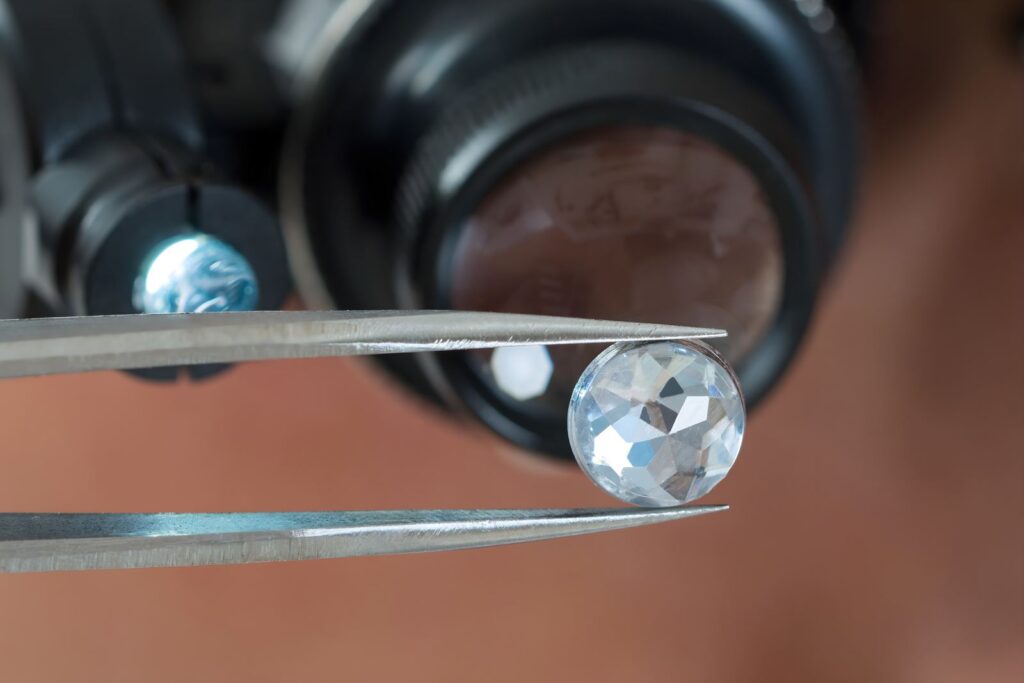
- We examine the stone under magnification and look at its cut, colour, clarity and any wear or chips.
- We check the setting and prongs, so we know whether the diamond is secure and how the metal should be assessed.
- We compare the stone with any grading report or appraisal you bring.
- We explain what we see in plain words and talk you through every option, with no pressure to decide on the spot.
Frequently asked questions
Why is my insurance appraisal so much higher than the offer?
An appraisal estimates the cost to replace the piece new at retail. A resale offer is what a buyer can pay today. They are designed to answer different questions.
Are lab-grown diamonds real diamonds?
Yes. They have the same chemistry and hardness as natural diamonds, but their resale value is usually much lower.
Do I need a grading report to sell a diamond?
It is not always required, but a report from a recognised laboratory makes the stone easier to identify and can support its value.
Can you tell me what my diamond is worth from a photo?
No. A diamond has to be examined in person; photos cannot show its clarity, colour or condition accurately.
Bring your diamond in for an honest assessment
Visit Noura’s Jewellery at Alta Vista Plaza in Ottawa. We will look at the diamond with you, explain its documents and talk about selling, resetting or keeping it. Call 613-680-8883 or message us on WhatsApp.
This guide is general information, not an appraisal, a binding quote or investment advice. Every piece is assessed in person.