
Good jewellery is made to last for generations, but everyday life is hard on it: soap, lotion, chlorine, door handles and gym weights all leave their mark. The good news is that a few simple habits keep gold bright, stones secure and chains free of knots. This guide shows you how to wear, clean and store your jewellery safely, and when it is time to let a jeweller take a closer look.
Put it on last, take it off first
The easiest rule in jewellery care is also the most effective. Put your jewellery on after creams, perfume, hairspray and make-up, and take it off before you clean, swim, exercise or go to bed. Here are the moments when your pieces are better off in their box.
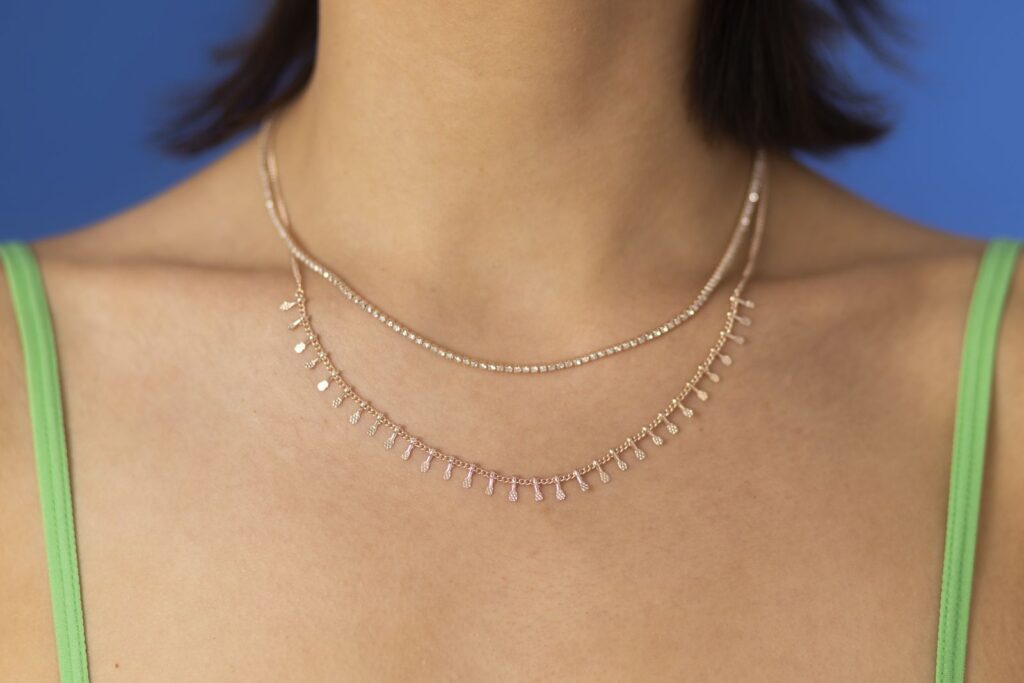
How to clean gold, platinum and diamond jewellery at home
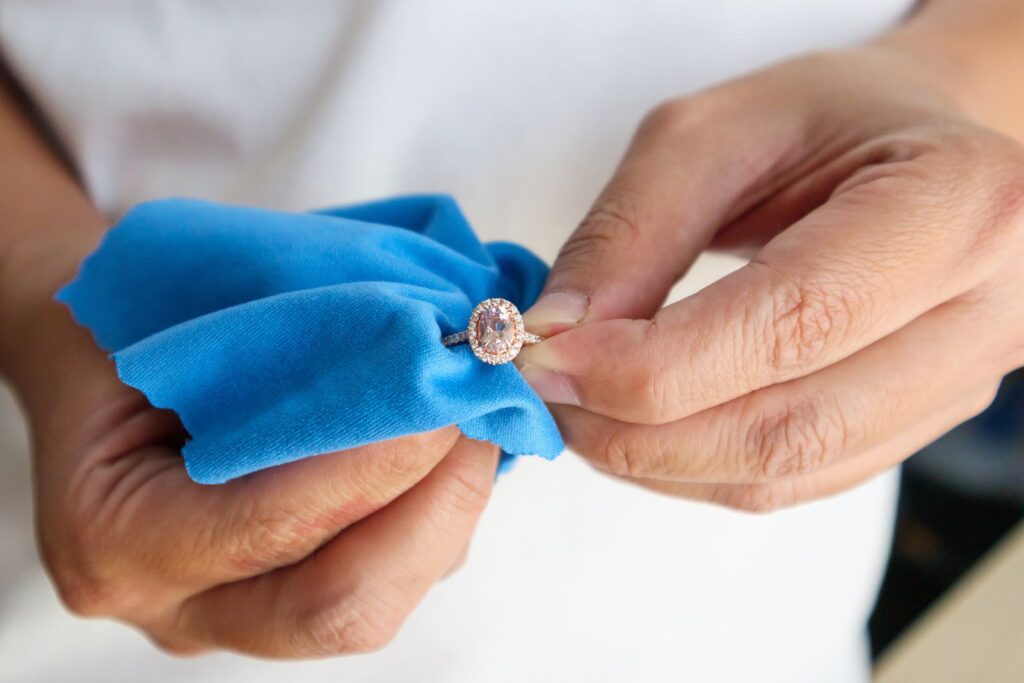
Most gold, platinum and diamond jewellery can be cleaned safely with nothing more than warm water, a drop of mild dish soap and a soft toothbrush. Diamonds attract skin oils and lotion, so a regular gentle clean brings back their sparkle.
- 1Soak for a few minutes in warm water with a drop of mild dish soap
- 2Brush gently with a soft, clean toothbrush
- 3Rinse in clean water, with the sink plugged
- 4Pat dry with a soft, lint-free cloth
A few things to avoid:
- Toothpaste and baking soda. They are abrasive and leave fine scratches on gold and soft stones.
- Bleach, chlorine and strong household cleaners. They can weaken gold alloys and damage stones.
- Paper towels and tissues. Their fibres can scratch polished metal. Use a soft, lint-free cloth.
- Home ultrasonic cleaners for every piece. They are not safe for pearls, opals, emeralds, turquoise, treated or fracture-filled stones, or settings that are already loose. Ask us if you are not sure.
Care for different materials
- Yellow and rose gold clean beautifully with soap and water. A polishing cloth brings back the shine between cleans.
- White gold is usually plated with rhodium. As the plating wears, a warmer colour can show through; re-plating restores the bright white finish.
- Sterling silver tarnishes when it meets air and moisture. Wear it often, wipe it with a silver polishing cloth and store it in an airtight bag or pouch.
- Platinum develops a soft satin look called a patina. Some people love it; a jeweller can polish it back to a high shine.
- Pearls are delicate. Put them on last, wipe them with a soft damp cloth after wearing and store them flat, never hanging.
- Soft and porous stones such as opal, emerald and turquoise dislike heat, chemicals and sudden temperature changes. Clean them with a soft damp cloth only.
Store every piece in its own place
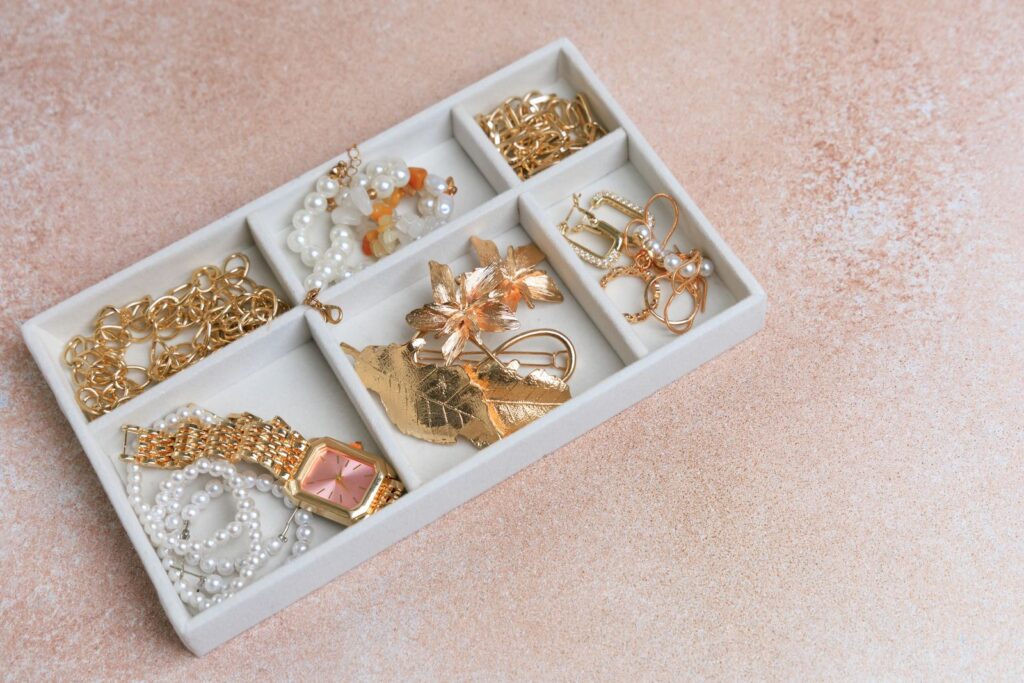
Jewellery that is thrown together in a drawer scratches itself. Diamonds are hard enough to mark gold and other stones, and fine chains tangle in minutes.
- Use a box with separate compartments or individual soft pouches.
- Fasten chains and hang them, or lay them flat, so they do not knot.
- Keep silver in an airtight bag with an anti-tarnish strip.
- Store pieces somewhere dry and away from direct sunlight, not in a steamy bathroom.
- Travel with a small padded case instead of loose in a bag.
Warning signs to watch for
Most lost stones and broken chains give a warning first. Check your favourite pieces now and then, especially rings you never take off.
- A stone that moves, rattles or sits higher on one side.
- A prong that catches on clothing or looks flat and thin.
- A ring band that has become thin, flat or out of round at the back.
- Chain links that look stretched or a clasp that opens too easily.
- An earring back that no longer grips firmly.
If you notice any of these, stop wearing the piece and keep any loose parts together. Small repairs such as prong retipping or a new clasp are much simpler than replacing a lost stone. See all our jewellery repair services.
A simple care routine
Every day
Put jewellery on last and take it off first. Wipe rings and bracelets with a soft cloth if they have been in contact with lotion or food.
Every week
Give the pieces you wear most a quick wipe with a polishing cloth, and check that earring backs and clasps are secure.
Every month
Clean gold, platinum and diamond pieces with warm water, mild soap and a soft brush, then dry them well.
Every 6 to 12 months
Bring the rings and pieces you wear every day to a jeweller to have prongs, settings, clasps and worn areas checked.
Whenever something changes
A loose stone, a bent prong or a weak clasp is a reason to stop wearing the piece until it has been looked at.
How Noura’s Jewellery can help
At our in-store workshop at Alta Vista Plaza, we can look over your jewellery with you, explain what we see and suggest what, if anything, needs attention. From tightening stones and rebuilding prongs to repairing chains and restoring a worn finish, we explain the work and the price before we start, and we treat your pieces the way we would treat our own.
Frequently asked questions
Can I clean my jewellery with toothpaste?
It is better not to. Toothpaste is abrasive and can leave fine scratches on gold and soft stones. Warm water, a drop of mild dish soap and a soft brush are safer.
Is it safe to shower with my jewellery on?
Soap and shampoo leave a film that dulls stones, and hot water and slippery hands increase the risk of loss. It is safer to take jewellery off before you shower or bathe.
Can I wear gold in a swimming pool?
It is best not to. Chlorine can weaken gold alloys over time and can damage some stones. Salt water and sand are also hard on settings.
Why does my silver turn dark?
Silver reacts with sulphur in the air and on skin, which causes tarnish. Wearing it often, wiping it with a silver cloth and storing it airtight all slow tarnish down.
How often should I have my rings checked?
For rings you wear every day, a check every six to twelve months is a good habit. Prongs wear slowly, and a quick look can catch a problem before a stone is lost.
Bring your jewellery in for a check
Visit Noura’s Jewellery at Alta Vista Plaza in Ottawa. We will look at your pieces with you and tell you honestly whether anything needs attention. Call 613-680-8883 or message us on WhatsApp.
This guide is general information. Some stones, finishes and antique pieces need special care, so ask us before trying a new cleaning method.