
Jewellery Journal · · Noura’s Jewellery
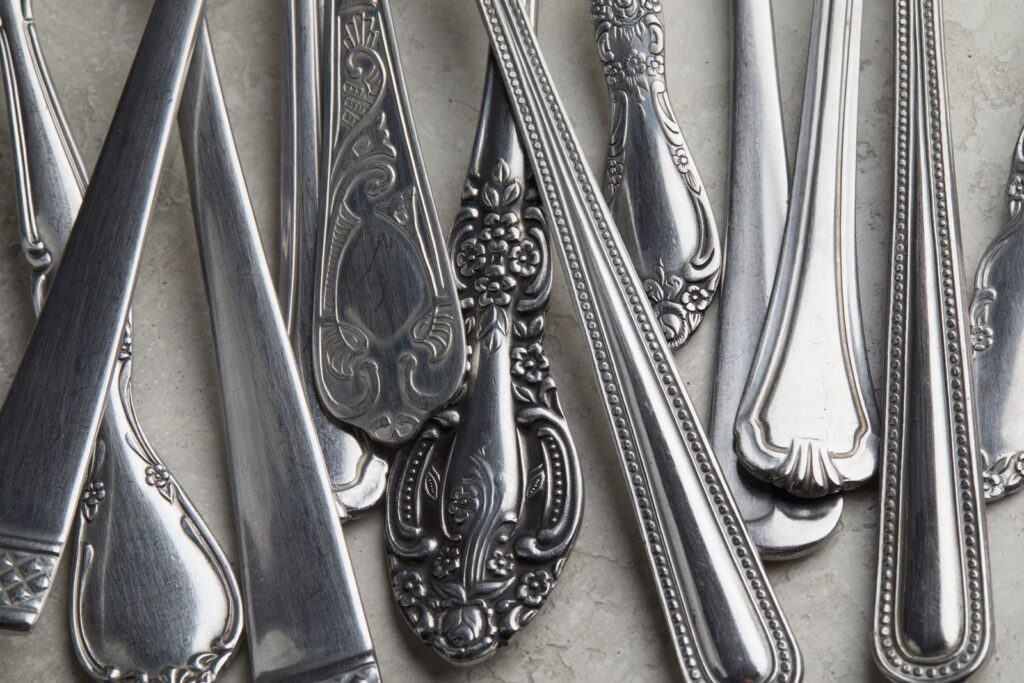
A drawer of family cutlery, a tea set from a grandparent, a chain that has turned dark: silver-looking items are everywhere, but only some of them are solid silver. Sterling silver and silver plate can look almost identical when polished, yet their metal value is completely different. This guide shows you how to read silver marks, which signs point to plate, and how to prepare silver items before you have them assessed in Ottawa.
Solid silver and silver plate: the difference
Sterling silver is an alloy of 92.5% silver, usually with copper for strength. The whole object is made of it. Silver plate is a thin layer of silver over another metal, often copper, brass or nickel alloy. From the outside they can look the same; the difference is what is underneath.
Common silver marks and what they mean
| Mark | Meaning | Silver content |
|---|---|---|
| 925, Sterling, STER | Sterling silver | 92.5% |
| 958, Britannia | Britannia silver | 95.8% |
| 900, Coin | Coin silver, common in older North American pieces | 90% |
| 800 | Silver often used in older European pieces | 80% |
| 999, Fine silver | Fine silver, used for bullion | 99.9% |
| EP, EPNS, EPBM | Electroplated (nickel silver or Britannia metal base) | A thin surface layer only |
| Silver plate, Quadruple plate, A1 | Plated ware | A thin surface layer only |
| Nickel silver, German silver | An alloy of copper, nickel and zinc | No silver at all |
Despite the name, “nickel silver” and “German silver” contain no silver. Older British silver may carry a set of small hallmarks instead of a number, including a lion symbol for sterling.
Clues that a piece may be plated
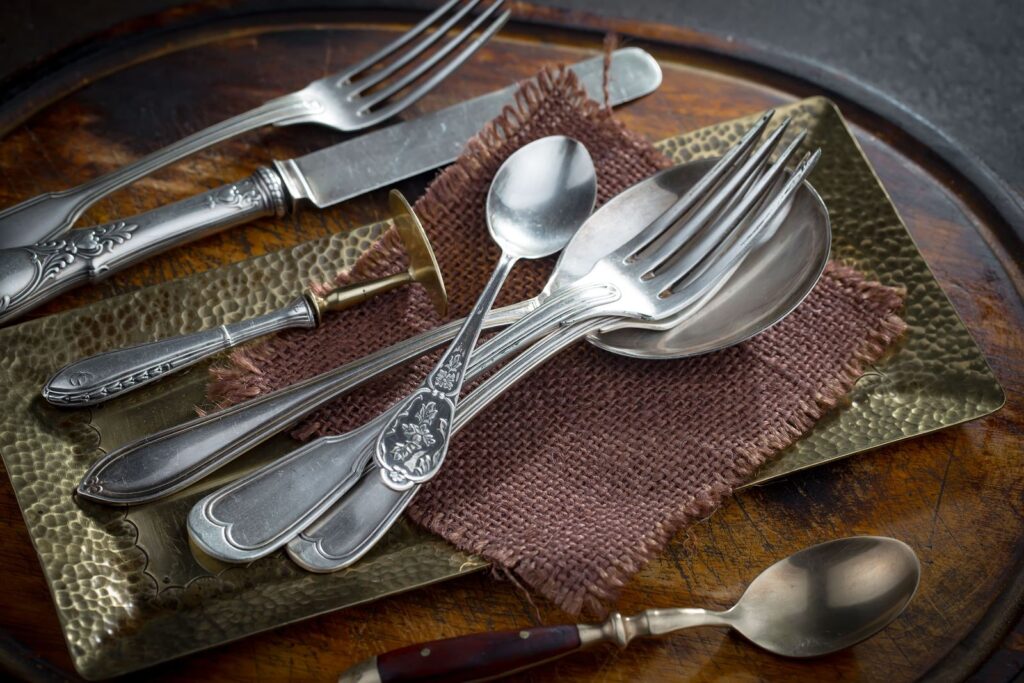
- A different colour showing through on edges, tines or high points, where the plating has worn away.
- Marks such as EP, EPNS or a maker’s name with “plate”.
- Very light weight for its size, or a large, heavy object with no silver mark.
- Fine bubbles, flaking or green spots on the surface.
No single clue proves anything. Tarnish and shine are not reliable either: plated and solid silver both tarnish.
Weighted and mixed pieces
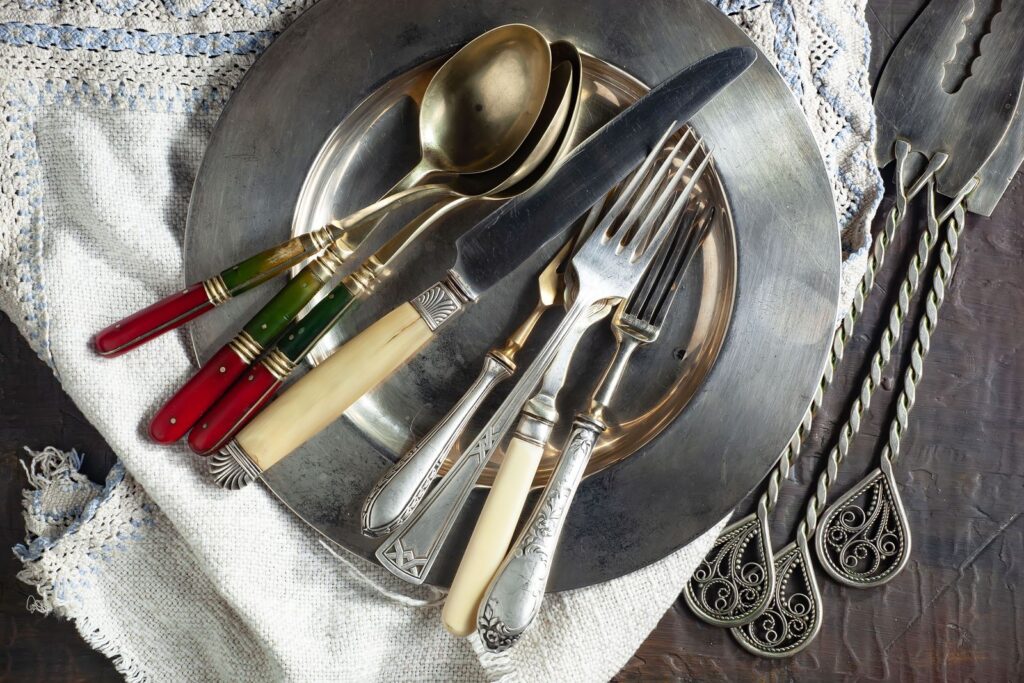
Some silver objects are only partly silver. Candlesticks, trophies and some bowls have bases filled with weighted material, and many knives have hollow silver handles filled with resin, with steel blades. Teapots can have wooden or ivory-coloured insulators. When a piece is assessed for its metal, only the silver parts count, so a heavy item on a kitchen scale does not mean a heavy weight of silver.
The magnet test and its limits
Silver is not magnetic. If a strong magnet pulls firmly on a piece, it probably has a steel or iron base. But a piece that ignores the magnet is not proven to be silver, because copper, brass and nickel alloys are not magnetic either. A magnet is a quick first check, not a test.
Before you bring silver to be assessed
- Bring items as they are. Do not polish, dip or scrub them; aggressive cleaning removes silver and can damage plating or coins.
- Keep sets together, along with boxes, receipts or family records.
- Do not take objects apart to remove weighted parts or handles.
- Tell us if you would like to keep any pieces, for example to have a family item repaired.
Our silver prices page shows today’s market value and our buying rates, and you can read more about selling silver at Noura’s.
Silver jewellery and silverware are assessed differently
Silver jewellery is usually small and light, and most of its weight is silver, apart from stones, clasps and springs. Silverware and household silver are larger and more varied: solid pieces, plated pieces and mixed pieces can sit side by side in the same drawer, even in the same set. That is why it helps to bring the whole collection rather than guessing which pieces are worth bringing.
Sterling flatware and hollowware can be heavy, and their silver content can add up. Plated sets, on the other hand, are usually valued for their use or design rather than their metal. Knowing which you have before you decide anything avoids disappointment and helps you keep the pieces that matter to your family.
How we look at silver at Noura’s
- We sort your items into solid silver, plated and mixed pieces, and show you the marks we find.
- We point out weighted bases, hollow handles and other parts that are not silver.
- We weigh only the silver that can be assessed and explain the rate that applies.
- If a piece might be worth more as an antique or a set, we tell you rather than treating it as metal.
- You decide what to sell, keep or repair, with no pressure.
Frequently asked questions
Is 925 silver real silver?
Yes. 925 means the item is sterling silver, 92.5% pure silver.
Does silver plate have any value?
Its metal value is very low, because the silver layer is thin. Some plated pieces have value as antiques or collectibles, which needs a separate look.
Why does my silver turn black?
Silver reacts with sulphur in the air, food and skin and forms tarnish. Both solid silver and silver plate tarnish, so colour does not show which you have.
Should I polish silver before selling it?
No. Polishing can remove silver, damage plating and reduce the value of coins and antiques. Bring it as it is.
Not sure whether it is sterling?
Bring your silver to Noura’s Jewellery at Alta Vista Plaza in Ottawa. We will check the marks with you and explain what can be assessed. Call 613-680-8883 or message us on WhatsApp.
This guide is general information, not an appraisal, a binding quote or investment advice. Every piece is assessed in person.