
Jewellery Journal · · Noura’s Jewellery
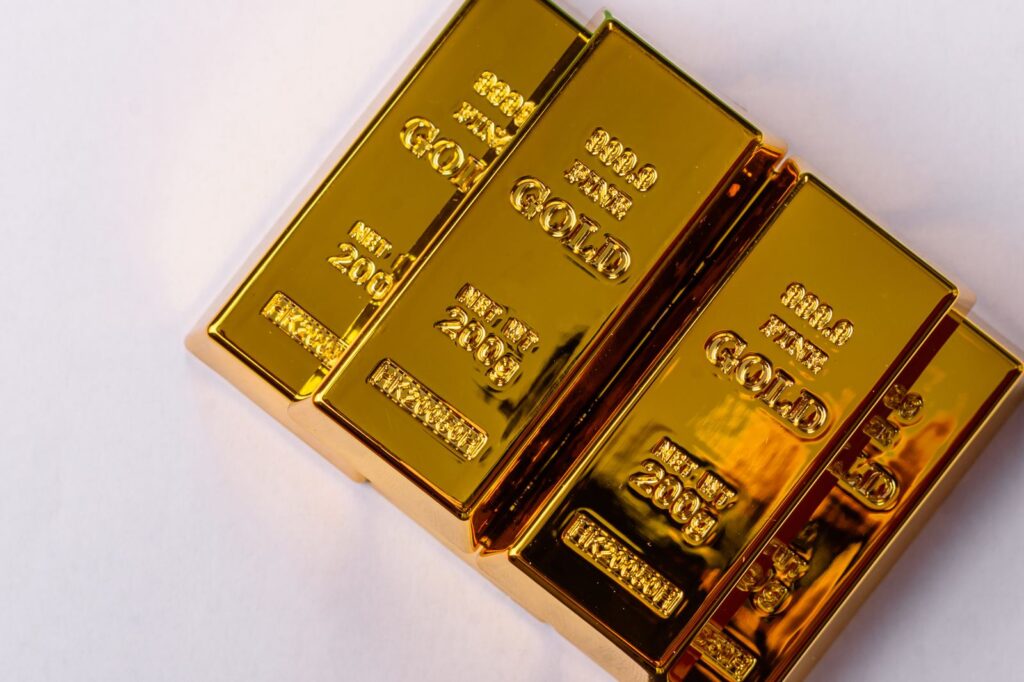
Should you buy a coin or a bar? Many people compare the two by their total price, or by how they look, but that is not a fair comparison. To compare bullion properly you need to put both products on the same footing: the same metal, the same amount of fine metal and the full price you will actually pay. This guide shows you how to compare coins and bars like with like, and what to think about beyond the price.
Step 1: compare the same amount of fine metal
Bullion is priced by the metal it contains. Before comparing two products, check:
- The metal: gold, silver, platinum or palladium.
- The fine weight: how much pure metal is inside, in grams or troy ounces. One troy ounce is 31.1035 grams, not the 28.35-gram ounce used for food.
- Fine weight or total weight: a 22K one-ounce coin weighs about 33.93 grams in total but contains one troy ounce of gold. Do not multiply a stated fine weight by the purity again.
- The purity: 999.9, 999 or 916.7, for example.
Step 2: work out the cost per fine gram
The simplest fair comparison is the total price divided by the fine weight. If a coin and a bar each contain one troy ounce of gold, divide each full price by 31.1 to get a cost per gram of gold. For a product containing ten grams, divide by ten. The lower result is the cheaper way to buy that metal, whatever the total looks like.
Use the complete price, including any taxes or charges that apply, so you compare what you will actually pay.
Step 3: look beyond the cost per gram
| Consideration | Coins | Bars |
|---|---|---|
| Who makes them | Government mints, such as the Royal Canadian Mint | Mints and refiners |
| Premium per ounce | Usually higher | Usually lower, especially in larger sizes |
| Recognition when selling | Very high for well-known coins | Depends on the refiner and packaging |
| Selling part of your holding | Easy: sell one coin at a time | A large bar has to be sold whole |
| Security features | Many modern coins carry mint security marks | Look for a sealed card and a serial number |
A slightly higher premium can be worth paying for flexibility and easy recognition. A lower premium can make more sense when you buy larger amounts and plan to hold them for a long time.
Buying price and selling price are different
The price a dealer charges to sell you a product and the price a buyer offers to buy one are two sides of a transaction. The difference, or spread, covers handling, testing and the dealer’s costs. When you compare, compare selling prices with selling prices and buying offers with buying offers, in the same currency. Our bullion guide explains premiums and spreads in more detail.
Protect the value of what you buy
- Keep coins in their original capsules or tubes and bars in their sealed cards.
- Keep your receipts and any certificates together.
- Never clean or polish coins; marks reduce what a buyer will pay.
- Store bullion safely and check your insurance cover.
Coins and bars at Noura’s
Tell us what you are looking for and we will confirm the exact product, its availability and the full price on the day, so you can compare options on the same basis. If you are selling, bring your coins or bars with their packaging and we will assess them and explain our buying rate. See buy bullion, sell bullion and today’s bullion prices.
Canadian coins worth knowing
Canadian buyers often start with the Royal Canadian Mint. Its Gold Maple Leaf and Silver Maple Leaf coins are struck in 99.99% pure metal and are among the most widely recognised bullion coins in the world. Recent Maple Leaf coins carry security features such as fine radial lines in the background and a small laser-engraved maple leaf mark, which help buyers confirm that a coin is genuine.
Recognition matters when you sell. A buyer can assess a familiar coin quickly and with confidence, while an unfamiliar product may need more checking. That does not make other coins or bars a poor choice; it simply means recognition is one more factor worth weighing alongside the price.
Mistakes to avoid when comparing
- Comparing a coin’s total weight with a bar’s fine weight.
- Comparing a selling price from one dealer with a buying offer from another.
- Ignoring taxes or charges that apply to one product but not the other.
- Choosing the lowest total price without checking the cost per gram.
- Assuming a premium paid today will be paid back when you sell.
Frequently asked questions
Are coins or bars a better investment?
We cannot give investment advice. Coins and bars both hold precious metal; the difference is mostly in premium, recognition and flexibility. Speak to a licensed adviser about investment decisions.
Why does a coin cost more than a bar with the same gold?
Coins cost more to design and mint, carry security features and are produced in smaller runs, so their premium per ounce is usually higher.
Is a one-ounce coin always 31.1 grams?
A one-ounce coin always contains about 31.1 grams of fine metal, but 22K coins weigh more in total because of the alloy.
Compare coins and bars with us
Visit Noura’s Jewellery at Alta Vista Plaza in Ottawa to compare gold and silver products on the same basis, with the full price confirmed on the day. Call 613-680-8883 or message us on WhatsApp.
This guide is general information, not investment, tax or legal advice. Prices and availability are confirmed for the specific product at the time of purchase or sale.