
Gold purity decides how much of a piece is really gold, how it looks and wears, and what it is worth if you ever sell it. Yet the numbers can be confusing: 10K, 585, 18K, 916. This guide explains gold purity in plain words, shows you how to work out the gold inside a piece, and explains why the market value of gold and a buying offer are not the same number.
What karat means
Pure gold is described as 24 karat. The karat number tells you how many of 24 parts are gold: 18K is 18 parts gold and 6 parts other metals, 14K is 14 parts gold and 10 parts other metals. Pure gold is beautiful but very soft, so jewellers mix it with metals such as silver, copper, zinc or palladium to make it strong enough to wear every day. Tap a karat below to see how much of it is gold.
Karat and fineness marks side by side
Many pieces carry a fineness number instead of, or next to, a karat mark. It shows the gold content in parts per thousand, so 585 means 585 parts gold out of 1,000.
| Karat | Fineness mark | Gold content | Where you often see it |
|---|---|---|---|
| 9K | 375 | 37.5% | Older British and European jewellery |
| 10K | 417 | 41.7% | Affordable everyday and class rings in North America |
| 14K | 585 | 58.5% | The most common karat in Canadian jewellery |
| 18K | 750 | 75% | Fine jewellery and engagement rings |
| 21K | 875 | 87.5% | Middle Eastern jewellery |
| 22K | 916 | 91.6% | South Asian and Middle Eastern jewellery, many bullion coins |
| 24K | 999 | 99.9% | Bullion bars and some traditional pieces |
Want to read the stamp on your own piece? Our guide to gold hallmarks and karats shows where to look and which extra letters, like GP or GF, change the meaning.
Yellow, white and rose gold
Colour comes from the metals mixed with the gold, not from the amount of gold. That is why a 14K white gold ring and a 14K yellow gold ring contain the same share of gold.
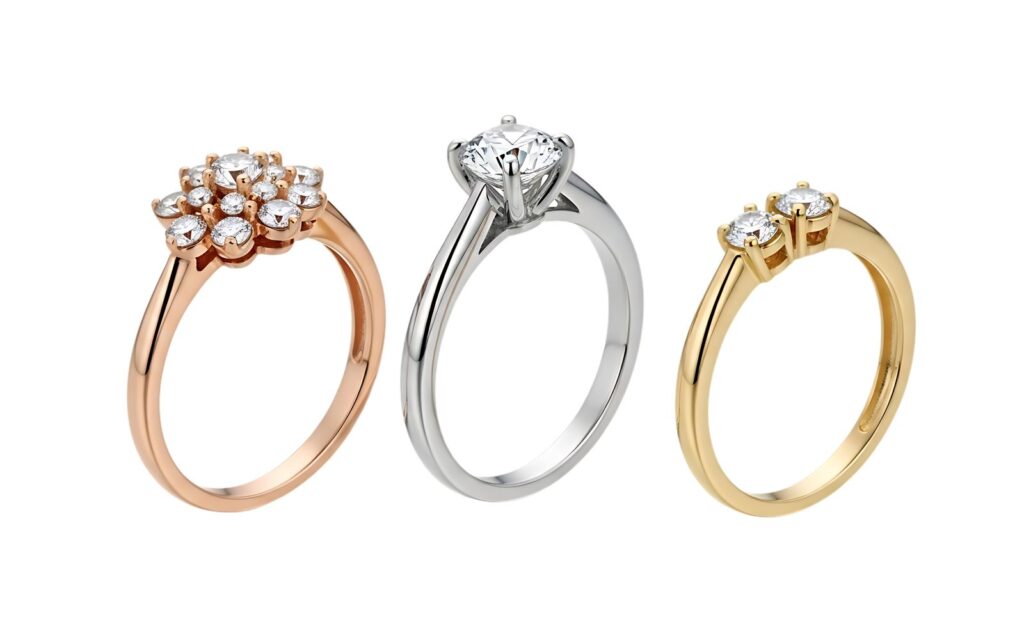
- Yellow gold keeps the warm colour most people picture when they think of gold.
- Rose gold uses more copper, which gives the pink tone and makes it slightly harder.
- White gold is mixed with white metals and is usually plated with rhodium for a bright finish. That plating can wear over time and can be renewed.
Which karat is right for you?
- 10K and 14K are harder and more affordable, which makes them a good choice for rings and bracelets that are worn every day.
- 18K has a richer colour and more gold, but it is softer and can scratch more easily on a busy hand.
- 22K and 24K are very soft. They are loved for their deep colour in traditional jewellery and bullion, but they bend and mark more easily.
- Sensitive skin? Some white gold alloys contain nickel. Higher karats, or white gold made with palladium, are often more comfortable for people who react to nickel.
How much gold is in your jewellery?
For gold valued by its metal, three numbers matter: the weight of the gold itself, its purity and the price of gold today. Multiply the weight by the purity and you know how much pure gold the piece contains. The example below uses today’s live gold price.
- Weigh in grams. Gold prices are quoted per troy ounce, and one troy ounce is 31.1 grams.
- Stones, pearls, springs and steel parts are not gold, so they are not counted in the gold weight.
- Hollow chains and bangles can look heavy but contain less gold than they appear to.
- Different parts of one piece, such as a chain and its clasp, can be different karats.
Market value and a buying offer are different
The price you see in the news is the market (spot) price of pure gold, usually quoted per troy ounce. A buyer, including any jeweller, pays a share of that value for scrap or unwanted jewellery, because the gold still has to be tested, refined and handled before it can be used again. When you compare offers, compare them on the same basis: the karat, the weight in grams and the rate paid per gram.
We publish our current per-gram buying rates on our gold prices page, and our precious metal calculators help you estimate before you visit. Branded, antique and gemstone pieces may be assessed differently, so ask before you decide.
How Noura’s assesses your gold
A stamp is a good start, but it is not proof. Marks wear away, pieces get plated or repaired, and different parts can be different alloys. Here is how we look at your gold at our shop at Alta Vista Plaza.
We talk with you first
Tell us what the piece is, where it came from and whether you are thinking of selling, repairing or redesigning it.
We read the marks under magnification
We look for karat and fineness marks, maker’s marks and signs such as GP or GF that change the meaning.
We test the metal when it is needed
If a mark is missing, worn or doubtful, we test the metal. We explain what we are doing before we test anything.
We weigh the gold and show you the numbers
You see the weight, the purity and the rate that apply to your piece, so you understand exactly how the offer is made.
You choose what happens next
Sell, keep, repair or redesign. There is no pressure, and nothing is agreed until you say yes.
Frequently asked questions
Is 24K gold better than 18K?
Not always. 24K contains more gold, but it is soft and scratches easily. 18K and 14K are stronger for everyday jewellery. The better choice depends on how you will wear the piece.
Does white gold contain less gold than yellow gold?
No. The karat sets the gold content. 14K white gold and 14K yellow gold both contain about 58.5% gold; only the other metals in the mix are different.
Is 10K real gold?
Yes. 10K is solid gold alloy containing about 41.7% gold. It is hard-wearing and common in North American jewellery.
Why does my gold ring leave a dark mark on my finger?
The other metals in an alloy can react with skin, lotions or chemicals and leave a mark. It does not necessarily mean the piece is not gold. A clean and a check usually tell you more.
Can I check gold purity at home?
Only roughly. Gold is not magnetic, so a strong pull from a magnet is a warning sign, but passing the magnet test does not prove a piece is gold. Testing in a shop is the reliable way.
Find out what your gold is really made of
Bring your gold to Noura’s Jewellery at Alta Vista Plaza in Ottawa. We will look at the marks with you, explain the purity and weight, and tell you your options. Call 613-680-8883 or message us on WhatsApp.
This guide is general information, not an appraisal, a binding quote or investment advice. Every piece is assessed in person.